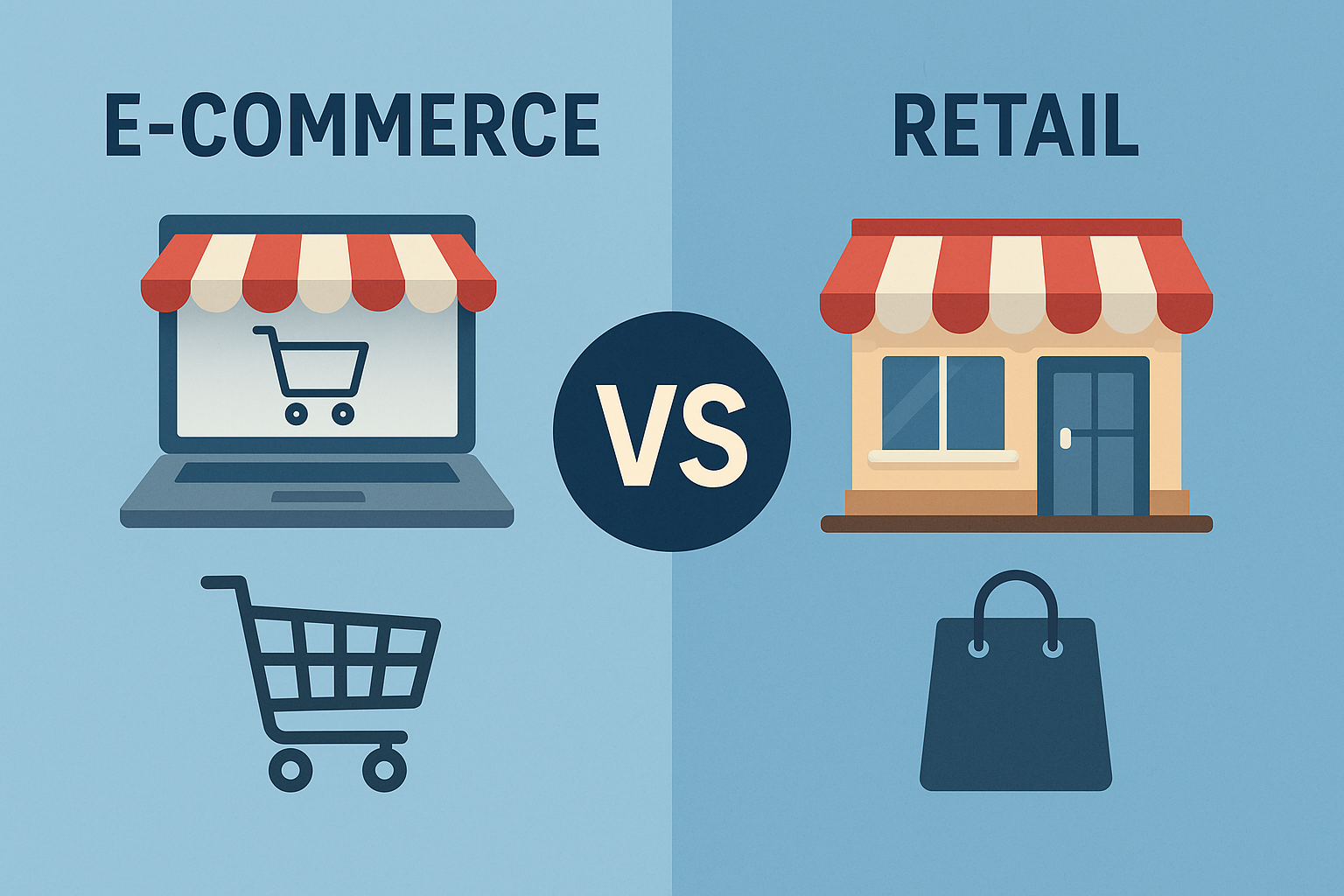
In today’s digital-first economy, it’s tempting to think of retail and e-commerce as entirely separate worlds. One lives in high streets and shopping centres, the other in the fast-loading pages of online stores. But while the tools and environments differ, the principles of attracting, engaging, and converting customers remain exactly the same.
If you’ve ever worked in or run a physical shop, you already understand the fundamentals of selling online. The trick is knowing how to adapt those offline skills into a modern e-commerce strategy that drives conversions.
Here’s a detailed breakdown of how the core elements of retail translate directly to the online world and how you can use these parallels for online store optimisation.
Storefront → Homepage
Your physical shopfront is your handshake with the world. It’s the visual hook that makes someone stop in their tracks and decide to step inside. A bold, attractive display doesn’t just show what you sell it tells a story and invites people into it.
In e-commerce, that role belongs to your homepage’s first visible section, often called the “above the fold” area. This is the first thing visitors see before they scroll, and it’s prime digital real estate that must:
- Clearly state what you sell.
- Communicate your brand identity instantly.
- Present a compelling reason to explore further.
Just like a shop window, if your homepage is unclear, generic, or cluttered, you’ll lose potential buyers within seconds.
E-Commerce Tip: Test this section on both desktop and mobile. A design that looks beautiful on a 27” monitor might feel cramped and overwhelming on a smartphone. Given that mobile often drives over 60% of traffic for many online stores, a mobile-first design is no longer optional it’s critical.
Observing Shoppers → Session Recordings
In retail, great store managers develop a sixth sense for shopper behaviour. They notice where customers pause, which items they pick up, and what they quietly put back. These subtle cues can reveal gaps in the store layout, product presentation, or pricing strategy.
Online, session recording tools like Hotjar, Microsoft Clarity, or FullStory give you the same insight in a digital format. They allow you to replay anonymised visitor journeys and spot patterns such as:
- Customers repeatedly clicking on a non-clickable element (frustration).
- Users scrolling halfway down a page before exiting (content mismatch).
- Shoppers abandoning checkout on a particular step (conversion barrier).
This isn’t about spying it’s about learning. The difference between a store that “looks nice” and one that sells is often these small but powerful tweaks.
Prime Retail Location → Fast Loading Speed
In the offline world, a prime retail location busy high streets, shopping centres, tourist hotspots can transform sales figures. Footfall is higher, and your brand benefits from being in a desirable place.
In e-commerce, your “location” is your site performance. A slow-loading website is like setting up shop at the end of a poorly lit alley people won’t even reach the door. Google’s own research shows that when page load time jumps from 1 to 5 seconds, bounce rates can increase by up to 90%.
E-Commerce Tip:
- Compress large images without losing quality.
- Remove unused apps or plugins that slow your store.
- Use a Content Delivery Network (CDN) to serve your site quickly to global visitors.
Speed is visibility. Search engines also reward faster sites with better rankings so this isn’t just a conversion factor, it’s an SEO win too.
Rearranging Shelves → Updating Layouts
In physical retail, rearranging shelves keeps the store fresh, encourages customers to notice new products, and can guide people toward high-margin items. A store that never changes feels stagnant, and shoppers stop browsing as actively.
Online, updating your layouts achieves the same results. That could mean:
- Changing your homepage banners to reflect new promotions.
- Reordering categories to highlight seasonal or trending products.
- Introducing curated collections for specific customer types.
Stale layouts tell visitors subconsciously that your store is neglected even if your product line is thriving.
Shopfront Signage → Headline Copy
Retail signage is a sales tool in its own right. It can highlight discounts, reinforce brand heritage, and make your offer clear in seconds.
In e-commerce, this role is filled by your headline copy. Strong headlines don’t just describe they persuade. They tell the customer why they should care.
Examples:
- Weak: “Shop Products”
- Strong: “Discover Handcrafted Candles That Transform Your Home”
Your headlines should be written with the same intentionality as a shop’s main display sign because they determine whether someone clicks deeper into your store.
Shop Assistants → Chatbots
Great sales assistants make customers feel welcome, answer questions quickly, and guide them to the right choice. They create trust.
In the digital space, chatbots and live chat systems fill this role. They can:
- Answer FAQs instantly.
- Suggest products based on browsing behaviour.
- Offer personalised discounts to encourage a purchase.
Pro Tip: Don’t settle for clunky, frustrating bots. Modern AI-powered chat systems can feel as natural as speaking to a human, and adding live human support during peak hours can boost conversion rates significantly.
Sales Staff → Pop-ups
A skilled in-store salesperson knows the perfect moment to make an offer never too pushy, never too late.
Online, pop-ups are your equivalent. They can be used to:
- Trigger exit-intent offers when someone is about to leave.
- Offer free shipping once a cart hits a certain value.
- Highlight a limited-time sale to create urgency.
The best pop-ups feel helpful and relevant, not like an interruption.
Footfall → Website Traffic
Retailers measure footfall the number of people walking through the door.
In e-commerce, that metric is website traffic. But the same truth applies in both worlds: not all visitors are equal. The goal isn’t just more traffic; it’s targeted traffic the kind that actually wants what you’re selling.
That’s where SEO, paid social, and email marketing come in. Just like retail advertising brings in your ideal local customer, digital campaigns bring in the right online visitors.
The Takeaway: Same Psychology, Different Tools
Whether you’re arranging a shop window or designing a homepage, the fundamentals of sales psychology remain unchanged:
- Make a strong first impression.
- Understand customer behaviour.
- Keep your store fresh and inviting.
- Guide visitors naturally from browsing to buying.
The technology may have evolved, but human buying habits haven’t. Treat your online store with the same strategic thinking as a flagship retail location, and you’ll see the results in both conversions and customer loyalty.
Next Step:
If you want help applying proven retail principles to your e-commerce strategy from conversion rate optimisation to digital merchandising get in touch with RKS Growth Strategy Solutions. We specialise in turning browsing traffic into loyal customers.