In an era where digital ad platforms change faster than their support chat responses, many businesses still spend like it’s 2018 throwing budgets at “what worked last quarter” and hoping the algorithm does the heavy lifting. But growth that lasts isn’t built on hope; it’s built on structured experimentation.
That’s where the 20/20/60 Ad Spend Rule comes in a framework I use at RKS Growth Strategy Solutions to balance creativity, data, and scalability. It’s simple, measurable, and built for the real world.
The Core Principle
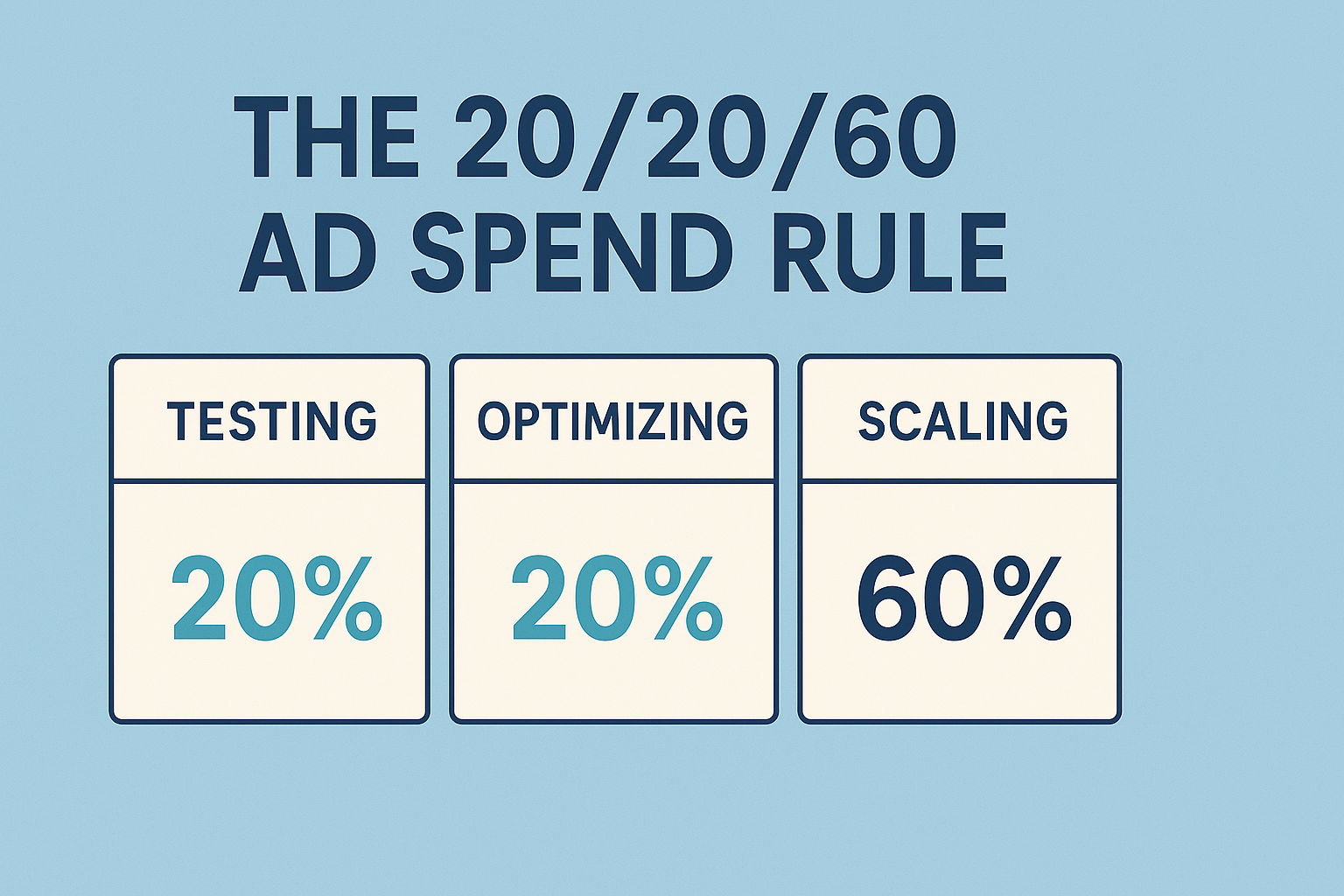
The idea is to split your ad budget into three clear categories:
- 20% for Testing
- 20% for Optimising
- 60% for Scaling
Each portion serves a different purpose in the marketing growth cycle and together, they keep your campaigns dynamic, efficient, and resistant to platform volatility.
The 20% Test Budget: Your R&D Lab
Think of this as your marketing laboratory. These are the campaigns designed to learn, not necessarily to convert.
Here’s what belongs here:
- New creative concepts (videos, hooks, imagery)
- Different copy angles or offers
- Alternative audiences, lookalikes, or interest clusters
- Fresh channels (for example, testing Pinterest ads, TikTok Shop ads, or YouTube Shorts)
Testing should be consistent not just when performance dips. Businesses that treat testing as an ongoing process build libraries of proven creative and data-backed insights that compound over time.
A good benchmark? At least five new ad variations per month cycling through this test pool.
The 20% Optimisation Budget: Your Refinement Zone
Once a test shows promise maybe a creative with a 2× higher CTR or a new audience segment converting below your average CPA it moves here.
This middle layer is about:
- Tightening targeting
- Adjusting bids or budgets
- Testing landing page variants
- Refining copy and creative combinations
You’re fine-tuning for efficiency. The goal is to squeeze more performance out of what’s already working before pouring serious money into it. This stage bridges data and decision the handoff point between discovery and scale.
The 60% Scale Budget: Your Growth Engine
This is where the heavy spend happens proven campaigns, stable audiences, and strong ROI.
It’s tempting to dump everything here, but that’s how you stagnate. The 60% only performs well because the 40% below it (testing + optimisation) continuously feeds it fresh winners.
In this stage:
- Keep creative rotations frequent (don’t let fatigue creep in)
- Use automated rules for scaling budgets gradually
- Track ROI weekly, not daily scale requires longer-term data
By maintaining this discipline, you avoid “burnout spend” where once-great campaigns collapse under overexposure.
Why This Works
The 20/20/60 framework mirrors how high-growth e-commerce brands and marketing agencies operate internally: fast testing cycles, controlled optimisation, and structured scaling.
It creates balance:
- Creativity isn’t crushed by spreadsheets
- Data directs decision-making, not guesswork
- Budgets grow efficiently instead of erratically
This approach turns ad spend into a predictable machine rather than a slot machine.
The Silent Multiplier: Feedback Loops
The real power of this method comes from how the three stages talk to each other. Insights from testing inform optimisation. Optimisation results guide scaling. Performance data from scaling feeds back into new tests.
It’s a living system a self-correcting growth loop that adapts to market shifts, algorithm changes, and creative fatigue.
At RKS, I often see this framework cut CPA (cost per acquisition) by 20–35% within the first 60 days, not because of any “hack” but because the process itself stops wasted spend and focuses attention where it matters most.
How to Apply It in Practice
- Map your monthly spend. Allocate exact percentages of your total ad budget to each stage.
- Track by intent, not just performance. A test ad might not convert but if it identifies a new audience or content style, it’s still valuable.
- Audit monthly. Shift winners upward (from test → optimise → scale) and retire the rest.
- Keep creative flowing. Without fresh input, the whole system stalls.
Closing Thought
Smart scaling isn’t about spending more it’s about spending smarter. The 20/20/60 rule keeps you agile, data-driven, and strategically experimental.
If you find yourself guessing which campaign deserves more budget, or watching performance swing wildly from week to week, it’s time to give your ads a system not just a strategy.
Need help structuring your paid growth plan or auditing your current ad spend?
Book your free 30-minute consultation at www.RKSGrowthStrategySolutions.com and let’s build your scalable marketing engine.